^
^

GETTING STARTED

BEGINNER DIFFICULTY

Analog vs Digital Signals

In your life, you've surely sent a message, watched a video, joined a call, looked up something on Google or ragequit an online game. If not, I don't know how I'm talking to you right now, but if you did - congratulations - you've relied on signals. You didn't see them, ask for them, maybe you didn't even know they were there. But they were there, and they were doing a lot of work.

At the most fundamental level of digital communication and networking, everything boils down to signals - the ways we represent, move, and make sense of data. And there are two main types of signals we absolutely need to understand: analog and digital.

You may be thinking, "Oh, come on, everyone knows this stuff, there's no need to talk about it". No, we need to talk about it - especially because everyone thinks it's common knowledge, meaning the topic usually gets glossed over.

Now, it's unlikely that you'll do any significant damage if you rely just on vibes here, but if you do understand how analog and digital signals work (and why we mostly moved from one to the other), suddenly things like Wi-Fi, streaming, and even optical fiber start making a whole lot more sense. Who could've guessed that understanding the technology you're working with will result in a better experience?

Things to know:

  • What a computer is
  • What a computer isn't
  • How to turn a computer on
  • Hot to turn a computer off

Things you'll learn:

  • What a computer is
  • What a computer isn't
  • How to turn a computer on
  • Hot to turn a computer off

Analog Signals

Let's start with analog signals first - they're something you're already familiar with indirectly.

Take sound, for example - what we perceive to be speech, music, or the pleasant sound of a jackhammer are just collections of vibrations. These vibrations form waves - sound waves that vary smoothly over time. That smooth and continuous variation is what makes a signal analog.

If you could zoom in on a sound wave, you'd see it rising and falling very evenly - no jumps, no steps, no sharp edges, just a curve that goes up and down that can represent potentially infinite values (please reference the illustration). Think of it as a vector image - you can zoom in on it as much as you want, but it's still going to be smooth. That's your classic analog signal.

These are everywhere in old-school tech. Radios and landline phones, for example, are both analog. So are vinyl records - those grooves literally hold sound as wavy patterns.

The point I'm trying to get at is that, due to the potentially infinite number of values that can be represented, analog is elegant and full of detail. Unfortunately, that can be both a benefit and a disadvantage.
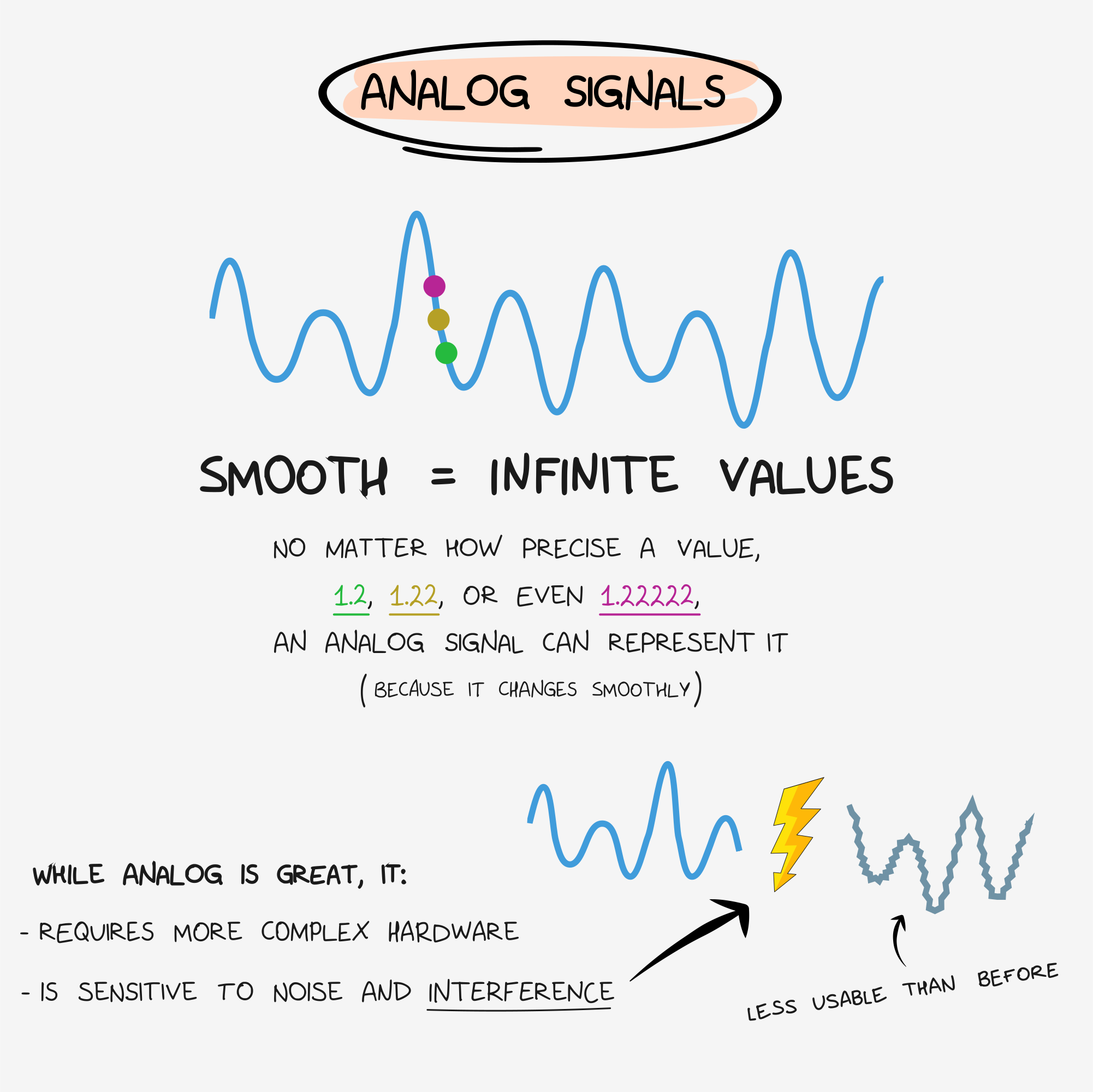
The first disadvantage is that analog is needy - you need more complex, precise, and stable hardware to make it work the right way.

The second one is that analog has no strong noise tolerance - noise will directly change the signal, and the longer it goes on for, the more it builds up. That's the main tradeoff of high fidelity - the blood, sweat, and tears that go into shielding analog signals from noise.

Diagram of analog signal as smooth sine wave showing continuous values and sensitivity to noise

click to enlarge (new tab)

Digital Signals

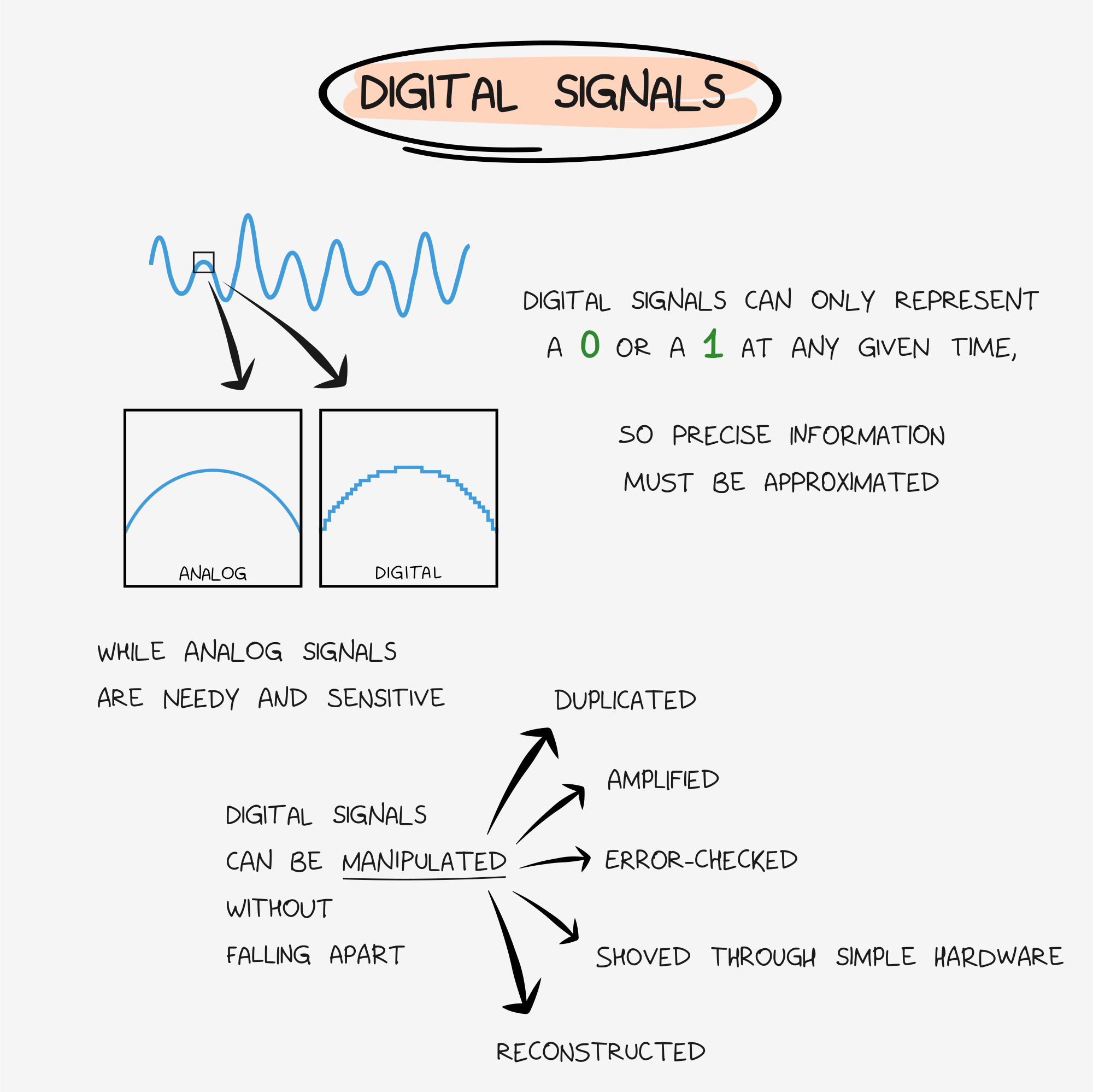
Now, what about digital? Digital signals are a bit different from analog’s smooth and continuous waves - instead of flowing smoothly, they use simple step-like values to represent information.

With digital, everything is encoded (represented) using only 2 logical states (from now on, I'm going to refer to them as values, for simplicity) - 1s and 0s. Think of it as a light switch that's either on or off, with nothing in between. That simple on/off is the foundation of all modern communication as we know it - any complex information can then be represented by combinations of these.

Every email, tweet, livestream, Discord call, or Slack message eventually gets turned into a string of bits: 1s and 0s flying through the air (or cables) at ungodly speeds just to be recombined back at the receiver into a "lol ok" message.

While that sounds cool, it can't be better than analog, can it? After all, what we experience in nature is, in fact, analog - continuous and infinitely detailed. Digital can't possibly compete with that, right?

Right. But it's not trying to - you can't out-nature nature itself. What digital is trying to do is be more reliable - to make the signal transmission controllable and predictable.

If we're sitting across the table and talking to each other, we can make out words, sentences, and tone just right. But if we stretch that table and, say, find ourselves on the opposite ends of the room, we likely will have to change the way we speak, because if we keep talking the same way as we did before, we won't hear each other that well anymore.

And that's the entire point of digital signals - since we're not dealing with potentially infinite values, all we have to do is figure out whether any specific value is supposed to be a 1 or a 0.

This makes digital signals far easier to verify and correct - they can be duplicated, amplified, error-checked, and shoved through all sorts of hardware without falling apart as easily, which is why we now use them pretty much everywhere.

If I send you a message and it gets distorted along the way, it's a lot easier to figure out whether that metaphorical light switch is supposed to be on or off, compared to "Is this sine wave the exact same shape it was 300 miles ago?". That binary simplicity of only having to deal with 1s and 0s is what makes digital communication incredibly robust in ways we need it to be.

And of course, analog and digital aren't enemies - they work together really well. Analog signals can be converted into digital ones, and we've gotten very good at that. If you want an example, think of a microphone - they take smooth, real-world sound waves and, through some magic I won't bore you with for now, turn them into electrical signals, which can then be turned into digital data.

Diagram comparing smooth analog sine wave with stepped digital signal

click to enlarge (new tab)

What's Better: Analog or Digital?
Now that we understand what analog signals are and what digital signals are, let's briefly talk about the eternal debate between the most illustrious of scholars and the brightest minds of our generation. The debate in question is "Which one is better?".

These kinds of posts and messages are usually found in music-related subreddits, videos, and forums, and I highly recommend checking the comment sections if you're bored and like watching people lose their minds over a difference in opinion.

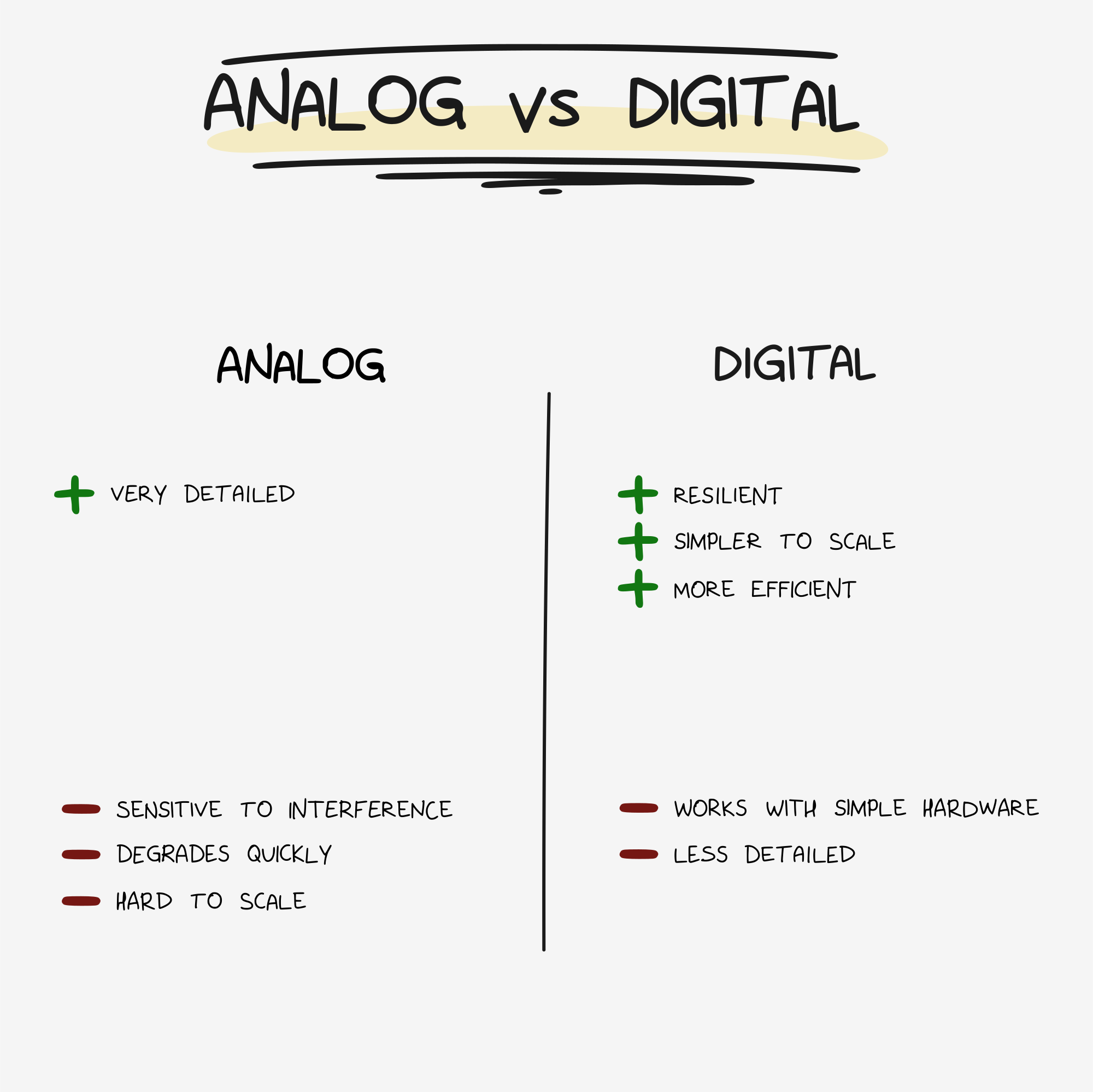
The bottom line is that yes, analog does offer a smoother, more detailed idea of the original signal, because it is the closest representation of it. But in practice, a lot of that detail gets easily buried under interference, signal degradation, and the cruel reality that analog doesn't scale well without expensive gear and lots of aspirin.

Digital sacrifices a bit of that smoothness for resilience. Instead of infinite values, you encode everything using just 2, while at the same time making error correcting way simpler, allowing bandwidth usage to be more efficient (in a lot of cases), and keeping hardware design way less ridiculous. To keep with our music analogy, that's why we traded vinyl's warmth for Spotify's cold convenience. And we're fine with that (mostly).

Diagram comparing analog and digital signals

click to enlarge (new tab)

How Wi-Fi (and Cables) Use These Signals
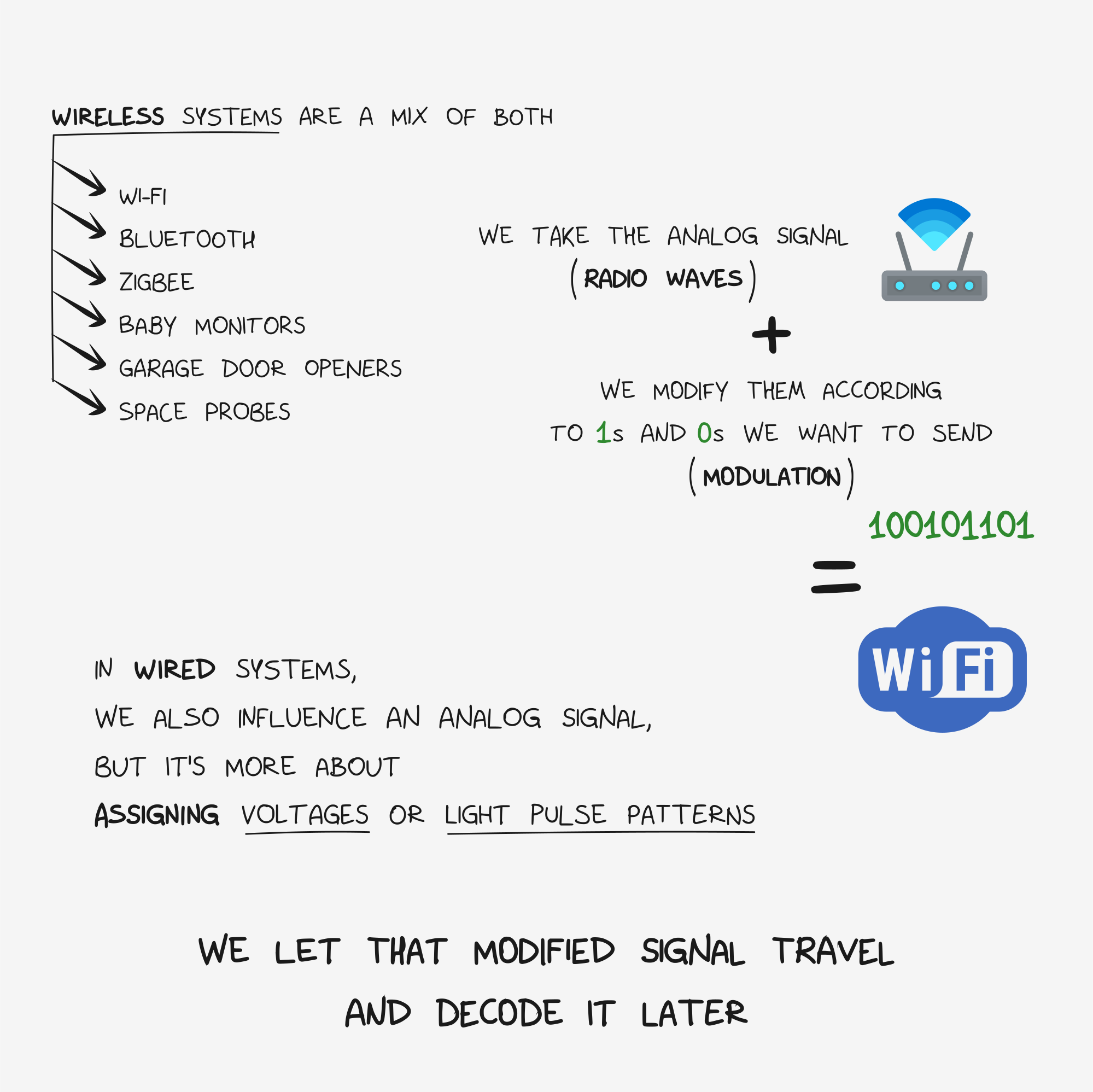
With that being said, I now want to talk about Wi-Fi. Here's the deal: digital signals don't physically exist in the air. No matter how hard you squint, there are no tiny 1s and 0s pinging off of us and getting funneled into an antenna. So how does Wi-Fi work?

The answer to that is brilliant - we take an analog wave and make it carry our digital 1s and 0s. That's what your router is doing - no matter whether it does or doesn't have those goofy antennas on the back (some of them can be and often are internal), the router is still blasting out radio waves, which are analog in nature.

We then take all your precious memes, spreadsheets, and questionable Google searches and modify those analog radio waves according to the patterns of 1s and 0s we want to send. The process is called modulation - you're modulating data onto what's called a carrier wave, which acts as that data's Uber driver.

And this isn't just Wi-Fi: Bluetooth, garage-door openers, baby monitors, and even deep-space probes - it's all the same trick. And in a way, even when it comes to cables.

I'm not going to bore you with the specifics since I'm going to talk about this quite literally in the very next chapter, but it's worth keeping in mind that all of this ultimately comes down to shaping analog signals - electricity in copper cables, or light in optical fiber.

The differences between these approaches are really about how we shape those signals, and how much of the medium we use at once. We'll get there when we get there.

Diagram explaining how wireless and wired systems use signals

click to enlarge (new tab)

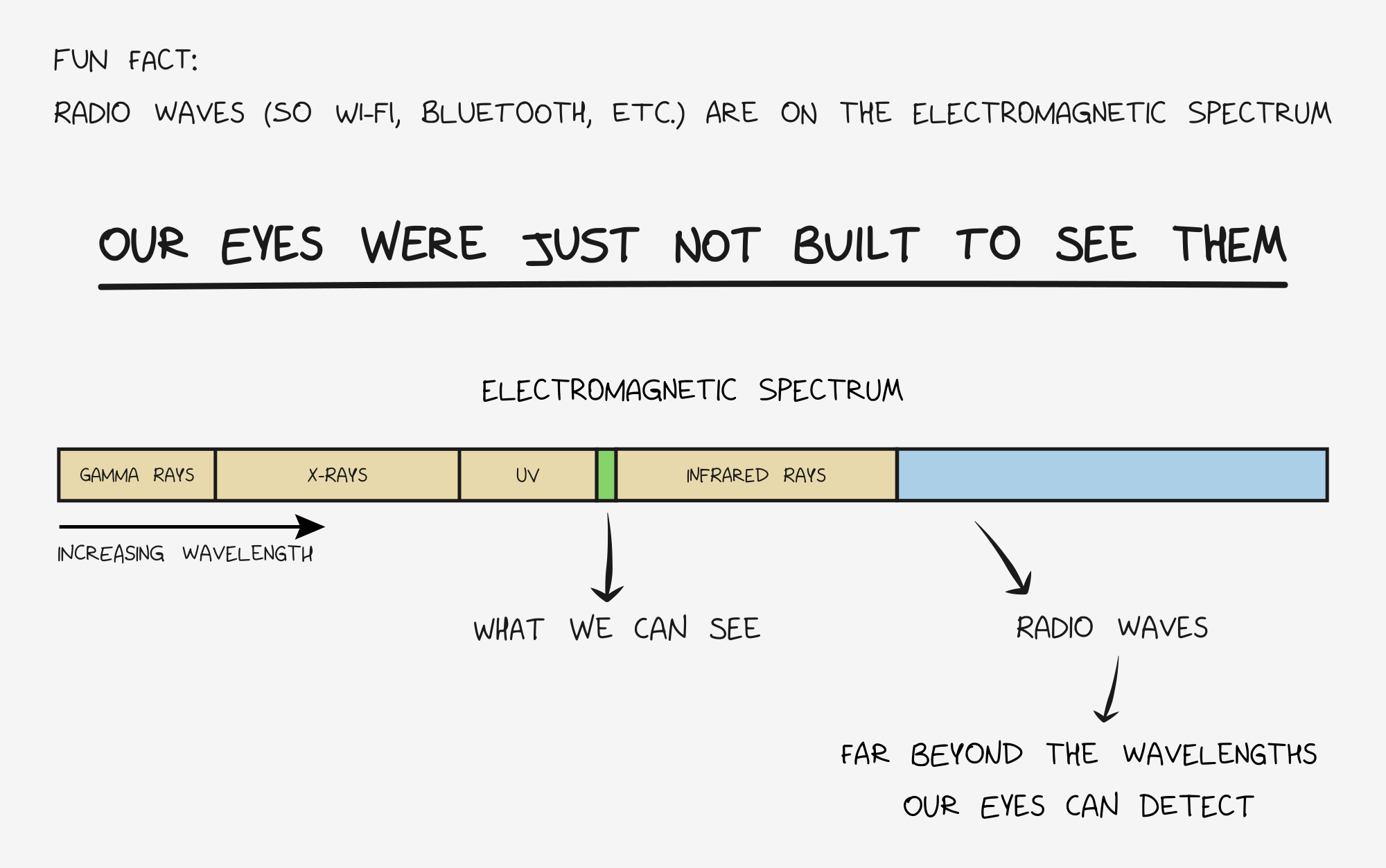
Oh, and by the way, if you're wondering why you can't see Wi-Fi radio waves floating around your room, it's because radio waves are a form of light. Not "light" as in "lightweight", but "light" as in "lightbulb" - they're part of the same electromagnetic spectrum as that lamp off to your side, but radio waves sit way outside of the tiny section of that spectrum our eyes can detect.

If you want an example of how ridiculous this is, consider that visible light wavelengths are around 400 to 700 nanometers in length. Wi-Fi is roughly 6-12 centimeters - about 100,000 times larger than what your eyeballs can pick up. It sounds pretty Lovecraftian, but that's true - your brain (or rather, your eyes) can't understand them. So if you've ever thought whether you could see Wi-Fi, the answer is no - you're just a human with extremely limited hardware.

Diagram of the electromagnetic spectrum and what our eyes can see

click to enlarge (new tab)

Final Thoughts

To wrap this chapter up, we can say that analog signals are amazing in principle. They're smooth, continuous, and elegant - the kind of signal that shows up with flowers and asks how your day was. But they're also fragile - throw enough noise at them noise and the whole signal starts wobbling like a toddler on roller skates.

Digital signals are cold, binary, and emotionally unavailable - but they're stupidly reliable. They scale well, they survive abuse, and they just keep working.

That's why in the modern world, fully analog systems are rare and are mostly reserved for audiophiles and vintage gear - most other things might start analog, but are converted into digital early. Your phone, your game consoles, and, most importantly for these videos, your internet - all digital. And when you understand how these signals actually work, you start to see this invisible scaffolding that keeps our networks (and the World Wide Web as a whole) from collapsing in on itself.